The strongest aesthetic outcomes with Botox rarely come from chasing lines. They come from studying how your face moves, then using tiny, precise doses to balance overactive muscles with quieter ones. Think of it as calibrating the pull of a mobile. When one string tugs too hard, the whole structure tilts. Ease that one tension point, and the entire piece settles into harmony.
What “proportion” means when we talk about neuromodulators
Proportion is more than symmetry. Two sides can be botox injections MI mathematically equal yet still feel off. What actually reads as balanced is the interplay of length, width, curvature, shadow, and the timing of expression. With Botox, we can dial down dominant muscles and allow opposing muscles to do their job. The aim is controlled facial movement, not frozen stillness, and expressions that look natural but more polished.
In practice, this means assessing three layers:
- Structural cues: skull shape, fat pads, and ligament support. These set the canvas. Dynamic patterns: which muscles fire first, strongest, and longest. This determines the story your expressions tell. Surface signals: creases, fine crepey skin, and makeup behavior. This is the visible readout of habits and time.
That lens helps answer common concerns like Botox for resting angry face, tired looking face, or stressed appearance. Those are often less about age and more about muscle dominance and habit driven wrinkles.
Movement literacy: reading your face in motion
In clinic, I always start by watching expressions at different intensities. A strong frown recruit that dimples the chin and pulls the mouth corners down tells a different story than a shallow brow pinch that spreads laterally. The first suggests an overactive frown complex paired with a hyperactive depressor anguli oris. The second points to squint lines and periocular wrinkles with a contribution from the lateral orbicularis.
This matters because proportion is kinetic. A face can be symmetrical at rest but asymmetric in motion due to uneven muscle pull. If your right brow lifts higher, if one lip corner drags, or if one nostril flares more, Botox for facial muscle dominance and facial symmetry correction can rebalance these patterns. Rather than chasing each wrinkle, the strategy is to treat the dominant side more than the weaker side, then retrain the habit with conscious expression control for a few weeks while the neuromodulator sets a new baseline.
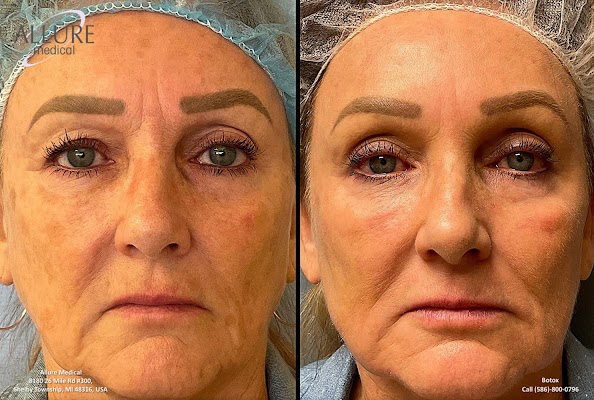
Can Botox change facial expressions, and does it affect emotions?
Botox changes movement by temporarily weakening target muscles. The question is degree and placement, not an on/off switch. Can Botox change facial expressions? Yes, it can refine them. Done well, it shifts a resting angry face to neutral, softens a tired looking face into an alert calm, and reduces the “over expressive forehead” without flattening communication.
Does Botox affect emotions? There’s ongoing discussion about facial feedback, the notion that less frowning might slightly dampen the internal sensation of anger or distress. Clinically, most patients report reduced facial fatigue and jaw tension relief, which often feels like improved mood. But the emotional experience is personal and multifactorial. Treatment design should preserve key expressive signals while limiting the muscle overuse that creates unwanted messages, like stress or irritation.
Botox and facial recognition changes have also been studied in contexts like our ability to read others’ emotions. When brows and eyes are over-treated, subtle social cues can be harder for an observer to interpret, especially on camera. This is why dosage discipline and realistic goals matter.
Mapping the upper third: brow position, eye openness, and forehead proportion
The upper face directs a large share of nonverbal communication. The balance point is different for each person, but a few anchors help:
Brow positioning and lateral support. If your brows sit low, you might rely on your forehead to lift them, creating forehead creases and a constant look of effort. Lightly relaxing the central frown complex can reduce inward pull, allowing the frontalis to lift with less strain. For some, a small lateral brow support dose around the tail helps reduce droop without flattening the arch. A soft, lateral-weighted approach can give a subtle brow shaping that looks less “done” than a high central arch.
Eye opening appearance. A thoughtfully reduced orbicularis oculi in the outer canthal area can refresh the eye area and lessen squint lines. It should still permit smiling eyes, just with fewer accordion folds. Patients concerned about eyelid heaviness should avoid aggressive forehead treatment without addressing crowding from the brow and upper lid. Done artfully, Botox for eye area refresh can give the sense of more light in the eyes.
Forehead shortening illusion. For those with long foreheads, we can use a blended approach to maintain a small degree of active lift, which keeps the hairline-to-brow distance from looking longer. If we turn the frontalis off completely, the brow may settle lower, paradoxically increasing this length. Small, evenly spaced doses, mindful of your natural brow arc, preserve proportion.
Over expressive forehead. Some professionals are chronic lifters. They peek at screens, then lift brows reflexively. Treating the habit with micro-doses can prevent etched lines without impairing expressive control. We often pair this with awareness coaching for a few weeks: catch the lift, relax the scalp, and blink rather than lift to refocus. This is Botox for facial muscle retraining in real life.
Midface signals: tired, stressed, or serene
The midface relays whether you look well rested. A few muscles carry outsized influence:
The frown habit complex. The corrugators and procerus pull brows down and in. Even a small increase in rest tone can read as annoyed. Low, precise doses to the frown complex often offer the highest return for Botox for stressed appearance and frown habit correction. It is not about freezing, it is about policing baseline tension so your default looks neutral.
Nasal behaviors. Some people widen the nose during speech or flare nostrils with each breath on camera. Micro-dosing along the nasal ala can tone down nose widening and nasal flare. This must be nuanced, because over-treatment can make the midface look stiff in profile. We use test doses and check for speech patterns before committing to full treatment.
Smile control and lip corner lift. If the depressor anguli oris dominates, corners tug downward even at rest. A tiny release at the DAO, paired with support for the zygomaticus smile elevators, can restore a more buoyant corner without altering your unique smile. Botox for smile correction and lip corner lift works best when the goal is barely perceptible change that shifts the emotional readout.
Perioral fine lines and crepey texture. Micro-Botox at very low concentration, placed superficially, can soften fine crepey skin without changing lip function. It is a narrow lane and should not be confused with filler. The gain is smoother makeup application and reduced lipstick feathering.
Lower face and jaw: tension, proportion, and profile balance
Clenching shows up on camera as bulk in the lower third and a square outline under stress. Botox for jaw tension relief lowers masseter dominance, which can ease clenching relief and stress related jaw pain. It also affects facial proportions. For a short face shape, reducing masseter volume can sharpen the angle of the jaw but might further shorten the perceived vertical height. For a long face shape, it can make the lower third look leaner and potentially longer. Planning here considers facial profile balance, not just symptom relief.
Chin and mentalis. An overactive mentalis creates pebbled skin and causes the lower lip to fold upward. Treating it smooths the chin and reduces facial tightness. We often pair this with a minimal dose to the platysmal bands in the neck if they tether the jawline. This improves the mentalis outcome and contributes to a refined facial look.
Lower lip and smile dynamics. Some smiles pull gums into view or pull one side higher. With careful mapping, Botox for uneven muscle pull can steady asymmetry. The target is usually small asymmetry corrections, not broad weakening. Overdo it, and speech and enunciation suffer.
Early aging signs and prevention without over-softening
Preventive Botox is about patterns, not birthdays. If you squint on the commute, stare at spreadsheets, and frown when thinking, you are a candidate for Botox for repetitive facial movements and muscle overuse, regardless of age. The goal is skin aging prevention and wrinkle softening without erasing expressive range.
Fine crepey skin around the eyes and cheeks can improve when micro-dosing reduces the accordion effect of repetitive motion. A side benefit is smoother makeup application and reduced makeup creasing. For patients planning major events, a three-step schedule works: light baseline two to three months out, a touch-up four weeks out to refine, then no changes the final ten days to avoid visible onset asymmetries. That rhythm supports a camera ready face, high definition face needs under bright lights, and a photo ready skin finish.
Sun damage prevention is not a primary use of Botox, but softer expressions mean fewer deep furrows that trap sunlight and cast shadows. Paired with sunscreen and retinoids, the compound effect over years can be meaningful.
The symmetry trap: when perfect lines look wrong
There is a common misstep: making the forehead clinically smooth and brows perfectly even. Faces are read by movement, and micro-asymmetries look human. Botox for natural facial balance means leaving a little lift in the lead brow, preserving a touch of crinkle at peak smiles, and letting the philtral column rise without tugging the corners down. Aim to harmonize the pattern, not sterilize it.
Small differences in bone, fat pads, and nerve dominance mean the same units do not produce the same effect on both sides. I often dose the dominant side 10 to 30 percent higher to achieve visual symmetry. I also prefer staged dosing for new patients. It is far easier to add than to wait out four months of heavy hands.
The camera test: calibrating for real life and lenses
Phones exaggerate shine, shadow, and micro-movements. Under 4K lighting, an over expressive forehead steals attention while lateral creases at the crow’s feet can make the eyes look smaller. Botox for camera ready face means addressing glare from horizontal forehead lines, narrowing peak squinting, and preserving a small, deliberate brow animation for emphasis.
Professionals who present on video often request expressive control, not less expression. That means reducing extraneous movements and keeping the ones that convey clarity, warmth, or emphasis. For instance, allow the lateral brow to rise a touch on your dominant speaking side to punctuate points, while minimizing central frown activation that reads as disagreement. Think of it as edit, not mute.
Building a treatment plan around proportion principles
I start with a movement map, then align it with the person’s priorities. A sample first session might include:
- Three to five points across the central frown complex to ease resting angry face without eliminating knit when needed. Light lateral brow support to resist droop, preserving a neutral arch and eye opening appearance. Micro-doses at the lateral canthus to soften squint lines while keeping smile radiance. Selective frontalis treatment to keep horizontal lines in check but maintain lift, avoiding the heavy brow sensation. If jaw tension is present, a conservative masseter dose with the plan to build over two to three sessions, protecting chewing comfort.
The dose depends on muscle strength, gender, metabolism, and previous exposure. Strong corrugators might need 15 to 25 units in total; a delicate forehead may need as few as 4 to 8 units, distributed to match the person’s lifting pattern. Most patients return at two weeks for fine-tuning. Even a half-unit adjustment at the tail of the brow can change the whole frame.
Facial shapes: long, short, and the role of movement
Long face shape. If vertical height dominates, avoid dropping the brows. Use a forehead plan that preserves gentle lift. Lessen central frown pull and add tiny lateral support to keep the brow from slanting downward. Keep the masseter reductions conservative unless function demands more, as slimming the lower third can increase vertical emphasis.
Short face shape. Here, careful downward pull reduction can lengthen the feel of the face. For instance, relaxing the DAO gently and supporting the lateral brow can lengthen the top and reduce downward vectors. Masseter treatment that narrows width can create the illusion of length, but ensure the chin and mentalis do not over-activate in compensation.
These are not rules, they are tendencies. Proportion is the mathematics of perception; small changes in vectors often beat large doses.
Risks, trade-offs, and how to avoid them
Every neuromodulator plan involves trade-offs. Over-treat the frontalis, and you risk eyebrow heaviness. Neglect the lateral orbicularis, and the crow’s feet can look prominent next to a smooth forehead. Treat the DAO without addressing lip elevators, and the smile can look tight.
Migration and diffusion behave differently across patients. In areas near the levator palpebrae superioris, even tiny drift can cause a mild lid ptosis. This risk is reduced by using accurate depth, the right dilution, and avoiding aggressive massage for a day. Around the mouth, diffusion can affect speech or straw use, so doses stay low and precise.
For clenchers, masseter doses that are too high, too fast can change chewing mechanics abruptly. I often step up across sessions, allowing the muscle and the nervous system to adapt. Patients notice improved sleep quality and reduced headache frequency when tension is addressed, but we monitor for chewing fatigue, especially in the first two weeks.
Skin surface: when micro-Botox makes sense
For fine crepey skin or pores on the cheeks and temples, micro-Botox at very dilute concentrations can lower sweat and sebum output and reduce fine crinkling. This helps with smooth makeup application and reducing makeup creasing. It is not a substitute for resurfacing, collagen stimulation, or a sunscreen habit, but it is a smart adjunct before special occasions when a polished appearance is essential.
Training the habit that made the wrinkle
Botox for facial muscle retraining works best with a simple practice period. For two to three weeks after treatment, keep a mirror close. When you feel a frown coming on, breathe and soften the eyelids rather than pulling the brows together. If you squint, raise the font size or adjust light. If you clench, schedule micro-breaks to spread the teeth and position the tongue on the palate. These adjustments leverage the quieter muscles, teaching a new default while the neuromodulator holds the line.
Subtle enhancement for professionals and performers
Public-facing professionals often seek a refined facial look that survives long days, harsh lighting, and HD cameras. The sweet affordable botox in Shelby Township MI spot is Botox for aesthetic refinement and dynamic wrinkle control. It offers a professional appearance without turning every frame into a still image. We set priority zones: keep glabella calm, maintain lateral brow mobility, tame mid-forehead lines, and leave a little squint for warmth. Add conservative masseter work for facial relaxation and clenching relief if stress related jaw pain is part of the picture.
For event preparation or special occasions, timing matters. Most patients see onset within 3 to 7 days, with peak at 10 to 14. Minor asymmetries can surface early and even out by week two. For large events, schedule treatment 3 to 6 weeks ahead. If you are camera heavy, test under your usual lighting after week two and adjust with micro-touches only if needed.
Where Botox fits and where it does not
Botox is a movement tool. It helps with wrinkle softening and controlled facial movement, but it does not replace volume loss treatments or address skin laxity. It pairs well with filler for contour, energy devices for tightening, and skincare for texture. For fine lines caused by etched-in creases, consistent cycles of Botox can gradually allow skin to remodel, but deep static folds may also need resurfacing or collagen-stimulating treatments.
It also has limits around the mouth for those who speak on stage or sing. Even small changes in lip function can be noticeable. Proceed cautiously, and accept that perfection around the perioral region may not be compatible with performance needs.
How we decide: practical checkpoints
Use these quick checkpoints to design a balanced plan without over-treating.
- Identify the one expression that most misrepresents you: angry, tired, or stressed. Target the muscles that create that signal first. Decide on a brow policy: preserve lift, redistribute lift laterally, or reduce lift. This drives your forehead map more than the lines do. Map dominance and asymmetry. Dose the stronger side a touch more to prevent recurring tilt. Leave one intentional movement cue for warmth: a slight lateral crinkle, a small brow rise, or a gentle smile line. Stage new areas. Add only one new region per session until you understand your personal response.
A case-based view
A 36-year-old project manager arrives with two concerns: colleagues ask if she is upset, and she feels facial fatigue by mid-afternoon. At rest, the brows are slightly pulled in from the corrugators. She lifts the forehead to compensate for mild brow heaviness. Her lateral crow’s feet are pronounced during smiles but pleasant.
We treat the frown complex with conservative dosing to reduce the inward vector, add very light lateral brow support, and place micro-doses in the central forehead to limit the habitual lift while preserving lateral mobility. No crow’s feet treatment initially, since they support warmth in her expression. At two weeks, the resting angry face has resolved, the forehead no longer strains, and the eyes look more open. We defer jaw work since there is no true clenching, just expressive fatigue. She returns three months later asking for the same plan.
Another example: a 42-year-old photographer with stress related jaw pain, uneven smile pull to the left, and a tired looking face on shoots. We start with conservative masseter treatment, staged across two sessions, and a tiny DAO reduction on the left to balance the lip corner. The forehead remains mostly active, with just a few units to soften the central lines. At follow-up, jaw tension has decreased and the smile is more level. He opts for small periocular doses to address squint lines that were accentuated under bright studio lights, careful not to erase his expressive range.
My principles for balanced outcomes
Over time, the same themes repeat. Balanced outcomes favor restraint, sequencing, and alignment with how you want to be read by others. Treat the message, not the map of lines. Consider proportion across the vertical thirds and horizontal fifths, but make decisions based on movement, not grid lines.
If you are new to treatment, start with the frown complex and mild forehead balancing. If you battle clenching, prioritize jaw function, then decorate the result with selective upper face refinements. If your career relies on micro-expressions, protect the lateral brow and outer eyes. If your goal is a polished appearance for a milestone event, plan two cycles in advance and stick to small, precise tweaks.
Botox, used with proportion principles, is not about hiding age. It is about removing the static and letting the signal through, so your face communicates what you intend: clarity, calm, and character.