Stand in front of a mirror and lift just the outer third of your eyebrow by a millimeter. Watch how your eyes open, how your upper lid smooths, and how your face reads less tired without looking “done.” That tiny change is the entire thesis of a lateral brow lift lite with Botox: microshifts in muscle balance that reshape how the upper face communicates.
I have used this approach for years with professionals who live on camera, new parents running on little sleep, and people who simply want their eyes to look less heavy without a surgical commitment. It is not a trick. It is thoughtful neuromodulator placement that leverages anatomy, habit patterns, and how the brain reads micro-expressions. Done well, it lifts the tail of the brow 1 to 3 millimeters, settles squint lines, and softens that resting angry face many of us inherit from our frown habit.
What follows is a practical guide, grounded in real treatment rooms, on how lateral brow support with Botox works, who benefits, where it can go wrong, and how to keep results natural while preserving expressive control.
What “Lite” Means in a Lateral Brow Lift
“Lite” is my shorthand for an approach that prioritizes subtle brow shaping over global forehead paralysis. Traditional forehead treatments often blanket the frontalis with a uniform grid of Botox, which reliably smooths lines but can flatten expression and drop the brows. A lateral brow lift lite narrows the focus to the outer third of the upper face. The goal is to relax the muscles that pull the tail of the brow down while preserving enough frontalis function laterally to allow a gentle lift.
This relies on a tug-of-war between elevators and depressors of the brow. The frontalis lifts the brow; the orbicularis oculi, corrugator, procerus, and depressor supercilii pull it down. If you over-treat the elevator (frontalis), the brow sinks. If you skip the depressors entirely, squinting pulls the tail downward and creates crow’s feet and that hooded feeling late in the day. “Lite” means targeting the right depressors while sparing the lateral frontalis so the lift can show.
In many cases, this is five to 12 units total, divided between carefully placed periocular points and a feather-light touch to the outer frontalis. The number is less important than the pattern and the face in front of you.
The Anatomy Behind Lift Without Freeze
You cannot design a lateral lift without respecting how different foreheads move. Some patients have a long forehead and a strong, vertically oriented frontalis that runs coast to coast. Others have a short forehead where frontalis fibers stop early, and the brow gets much of its mobility from the orbicularis. There are also differences in facial muscle dominance: one side may pull down more strongly, leading to uneven muscle pull and visible asymmetry.
In practice, I assess a few things before deciding where Botox should go:
- Brow position at rest, in animation, and during reading. Many patients carry a subtle left brow drop due to dominant right-handed frowning and monitor setups. Corrugator function by asking for an angry face. Heavy inward pull demands a touch of frown habit correction, even if the patient’s focus is lateral. Orbicularis strength during a squint. Overactive facial muscles here deepen crow’s feet and drag the brow tail. Frontalis activation pattern. Some people lift laterally first, others lift centrally. Over-treat the wrong zone and you get eyebrow heaviness or a “Spock” peak.
That last point is critical. If we blunt the medial frontalis more than the lateral, the tail can overarch, creating a cartoonish peak. If we blunt the lateral frontalis too much, the outer brow sinks and the eye looks more closed. The “lite” path walks between these outcomes.
How Small Doses Influence Expression and Perception
Patients often ask two questions in the chair: can Botox change facial expressions, and does Botox affect emotions? The first is easy. Yes, Botox adjusts the amplitude of certain expressions by reducing muscle contraction. This is not just about smooth skin. Reduced downward pull changes how your resting face reads. Brow shaping can make a tired looking face brighter, ease a stressed appearance, and soften an over expressive forehead without erasing movement. With conservative dosing, you keep dynamic wrinkle control while still allowing expressive control.
The second question, about emotions, sits at the edge of aesthetics and psychology. There is research suggesting that dampening frown intensity can feed back to the brain to reduce felt negativity in some people. Real-world translation: if you do not frown as intensely all day, your face sends fewer “tense” signals to your nervous system. Patients often report less facial fatigue and a lighter mood when they can no longer clench their frown all morning. Still, emotions are complex. Botox is not a therapy, but it can reduce the physical load of muscle overuse, jaw tension relief for clenching, and stress related jaw pain, which many experience as emotional relief.
There is also a practical social layer. Subtle brow shaping and wrinkle softening supports facial recognition cues. Friends read you as more awake and approachable when your eyes open and your brow tail points outward rather than down. That is not about pretending to be younger. It is about aligning your outside with how you feel inside.
The Treatment Map: Where the Lift Comes From
I prefer to think in zones rather than dots. The lateral brow lift lite taps three zones.
First, the outer orbicularis at the upper crow’s feet border. A microdose here reduces the downward tug that folds squint lines and droops the tail during smiles. This is the “depressor edit.”
Second, the tail of the frontalis, which varies by person. If the lateral frontalis is dominant, I avoid it or place a very light, high injection to create a forehead shortening illusion and keep lift lateral. If the central frontalis is dominant, I soften it so the lateral fibers can pull slightly more.
Third, the glabellar complex. Not always, but when the frown habit is strong, even two to six units across the medial corrugators and procerus can unload the brow. That removes a constant downward force that fights the lift. Precision here matters, especially for patients who rely on subtle frowns for nuance in their professional appearance.
The map is scribed in motion. I ask patients to scroll their phone, read a paragraph, then look up quickly. We mark when the face behaves naturally. Your habitual movements under load are more honest than a staged frown in a quiet room.
Dosing, Timing, and What to Expect Day by Day
Botox does not lift the local botox injections MI same day. Results start to emerge at 48 to 72 hours and settle over 10 to 14 days. Eyelids may feel lighter by day three; brow shape becomes obvious by week two. In that window, people often watch themselves in selfies and judge too early. Resist the urge. Small imbalances can self-correct as the whole network equilibrates.
If I am refining a face for a special occasion, ideal timing is three to four weeks prior. That allows for a tiny tweak if needed at day 14. For new patients, I start conservative. It is easier to add two units to the outer orbicularis or lift a lip corner for smile correction at review than to wait out an overshoot.
Longevity for this pattern is usually 2.5 to 4 months. High movers with overactive facial muscles and habit driven wrinkles wear it off faster. Those who are deliberate with facial relaxation and reduce repetitive facial movements often stretch results.
Natural, Not Frozen: Preserving Youthful Motion
The best feedback after a lateral brow lift lite is not a compliment about smoothness. It is the comment that makeup sits better, eyes look open, and you look rested. Botox for smooth makeup application and reducing makeup creasing comes from detensing the canvas, not erasing it.
A few tactics protect natural facial balance:
- Aim for asymmetry correction, not symmetry perfection. Faces are asymmetric by design. If one brow is always a hair lower due to uneven muscle pull, a half unit difference laterally can relieve it without making you look off. Keep the tail mobile. You want enough orbicularis to smile with your eyes. Over-chilling it can make photos look flat despite photo ready skin. Respect forehead length. In a short forehead, lateral dosing needs an even lighter hand to avoid eyebrow heaviness. In a long face shape with a high hairline, you can use Botox for facial proportions to create a soft forehead shortening illusion by blunting upper frontalis, which visually lowers the hairline and emphasizes the eye area. Never chase a brow peak with more central units. If you see a high lateral point emerging at day seven, the fix is usually a microdose under the peak or a tiny top-up in the orbicularis, not more central frontalis suppression.
Face Shape, Brow Shape, and the Role of Proportions
Brow height and tail position alter face shape perception. A lateral lift can benefit both long face shape and short face shape patients, but for different reasons. On a long face, a slightly higher tail widens the upper third, balancing vertical length. On a short face, too much lift can push the balance upward and make the forehead look taller, so the “lite” is especially light.
From the side, a gentle lateral lift improves facial profile balance by opening the eye aperture. You will notice lashes appear more visible and the upper lid platform is cleaner, which helps with smooth eyeshadow placement. For those with facial dominance on one side, lateral brow support on the stronger side often reduces the feel of facial tightness and ends-of-day facial fatigue from constant compensatory lifting.
Beyond the Brow: Subtle Edits Around the Eye and Midface
A lateral brow lift lite pairs well with a few micro-treatments that polish the eye area without changing identity.
Periocular wrinkles, especially the radiating squint lines at the outer eye, soften with minimal dosing that still preserves a crinkly smile. Work the top half of that fan rather than the lower points to avoid smile stiffening.
Nasal flare and nose widening can be tamed with microinjections to the dilator naris in selected cases, especially in expressive speakers or on-camera talent who feel their nose broadens on emphasis. This is an advanced choice and not for first-timers.
Lip corner lift with a trace into depressor anguli oris can neutralize a subtle downturn that contributes to a stressed appearance. Go too far and you lose nuance in speech, so I reserve it for clear asymmetries or when a patient is comfortable with small adjustments.
These tweaks share a theme: reduce overuse that draws the face down, keep upward vectors open, and preserve youthful facial motion.
Skin, Sun, and the Surface Story
Botox is not skincare, but it helps skin behave like younger skin. Fewer micro-folds from muscle overuse lowers the chance of lines etching into the dermis. This is skin aging prevention in the most literal sense: preventing a crease from becoming a crease. Fine crepey skin around the lateral brow and crow’s feet, especially in sun-exposed patients, responds well when motion is eased and skin smoothing allows product to sit undisturbed. You still need sun protection. Botox for sun damage prevention is indirect. It reduces the need for squinting in bright light if you match it with sunglasses. The real sun protection remains a hat, shade, and broad-spectrum sunscreen.
Expressiveness, Cameras, and High-Definition Reality
You can spot heavy-handed neuromodulator work in high-definition: the brow sits low and immobile, the midface compensates, and makeup cracks at the edges. The lateral brow lift lite is the opposite. It sets up a high definition face by balancing vectors rather than padding them. The outer third of the brow clears the upper lid so liner and mascara work. The crow’s feet soften just enough to keep a smile readable on 4K without looking creased.
This is why many on-air clients schedule a tight rhythm. They want a professional appearance that reads as polished, not plastic. It also helps with a camera ready face on event preparation timelines. I have guided brides, executives ahead of investor days, and actors between episodes. The rhythm is consistent: conservative first pass, reassess at day 14, and leave room for micro-corrections so facial recognition changes do not surprise colleagues or fans.
Safety, Side Effects, and What Can Go Wrong
The most common misstep is over-treating the frontalis laterally, which drags the brow tail and makes the eye look smaller. The second is ignoring the frown complex in a heavy frowner, which leaves downward pull unchecked and undermines the lift. A third is chasing crow’s feet too low. That can affect the smile or cause cheek heaviness.
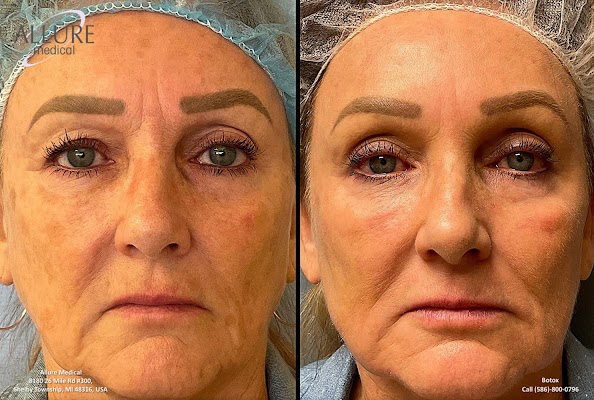
Eyelid ptosis is rare with lateral work, but diffusion into the levator can happen if you chase low medial lines or push excessive volume. Stick to microdoses, stay superficial, and respect bony landmarks. Transient headache, a tight headband feeling, or a sense of facial stiffness can occur the first week as the brain adapts to new muscle cues. Most settle within days. If a patient reports muscle fatigue or facial stiffness beyond the initial period, that is a sign to reduce dose or skip a zone next round.
I also watch for how botox for facial harmony improvement interacts with individual speech and habit patterns. For example, in teachers or trial attorneys who use brow lifts for emphasis, I protect more frontalis and focus on depressors. For avid runners who squint in sun, I lean into the orbicularis to prevent that repetitive pull. Custom beats cookbook.
The Emotion Question, Revisited With Nuance
People read faces quickly. If your resting brow pulls down and in, strangers can misinterpret you as stern, even when you feel neutral. A well-planned lateral brow lift lite supports a more open, positive baseline. Does that change how you feel? Some notice less tension once their overactive muscles quiet, especially those with clenching relief needs or stress related jaw pain from a tight masseter. Others simply enjoy not seeing forehead creases deepen over the day.
Regarding botox and facial recognition changes, the shifts are subtle when treatment is conservative. Family members often comment that you look refreshed without pinpointing why. If someone tends to process faces heavily through brow movement, they might pick up the change more readily. Keep lines of communication open. If you perform or speak for a living, bring your real-world concerns. We can protect specific movements while improving wrinkle softening and dynamic control elsewhere.
Who Is a Good Candidate
Candidacy depends on three things: anatomy, expectations, and timing. Good candidates have mild to moderate lateral brow heaviness, active crow’s feet, and an over expressive forehead laterally. They prefer subtle enhancement, want to maintain natural facial balance, and can wait two weeks for full results. If brow ptosis is severe due to skin redundancy or heavy lateral hooding, surgery or skin tightening devices may be a better foundation before neuromodulators.
People with strong visual habits like constant squinting or habitual frowning benefit from facial muscle retraining alongside Botox. Simple cues, like raising your gaze line on monitors or using a glare filter on screens, reduce muscle overuse and prolong results.
Real Schedules and Real Life
In practice, here is how a first cycle often looks. We meet, map movement, and place a conservative plan. Day three you notice an eye area refresh. Day seven the lateral brow support becomes obvious. Day ten you test your expressive range. If there is eyebrow heaviness or a minor peak, day 14 is the refinement visit. After that, you ride the results for about three months.
Two types of follow-ups exist. The first is maintenance every three to four months. The second is event-based. For special occasions, plan at least three weeks ahead, especially if photos matter. If you do on-camera work or have a big presentation, schedule a check-in a week before so we can handle a small tweak.
A Short Checklist to Stay Natural and Precise
- Share how you use your face at work and in sport. It guides dosing and protects the movements you need. Ask for photographs at rest and in motion pre-treatment. They help calibrate future visits. Start light on the lateral frontalis. Add later only if needed. Resist touch-ups before day 10. The face is still settling. Pair Botox with sunglasses and screen adjustments to reduce squinting and preserve results.
Botox Beyond Lines: Comfort and Habit
Botox for jaw tension relief and clenching relief often pairs well with brow work in patients who carry stress in their masseters and temples. When the temples stop straining to hold up a heavy brow, and the jaw stops clenching at night, many describe a combined release. That does not mean high dosing. Even small, targeted units can lower muscle tone enough to break a habit loop. Over time, many find they do not reach for frown or squint patterns as often, which enhances controlled facial movement rather than suppressing it.
Facial muscle retraining can be as simple as two minutes a day. At red lights, practice a soft gaze with the brow at rest and the jaw unhinged slightly. Notice when you pull the brows together to think. Switch that habit to a tiny lip press instead. Small behaviors sustain results.
The Money Question: Units, Costs, and Value
Units drive cost. A lateral brow lift lite usually uses fewer units than a full upper face treatment. That is part of its appeal. Yet value is not just price per unit. It is precision. Ten units in the right places beat 20 scattered without a plan. For many, the value shows up every morning when mascara goes on faster and the mirror shows a calmer face. For some, it is the professional advantage of a polished appearance. For others, it is the confidence boost of matching how they feel to how they look.
Edge Cases and When to Wait
If you have a history of eyelid ptosis, dry eye, or reliance on brow lift to compensate for heavy lids, cautious dosing and sometimes a staged plan are better. If you are breastfeeding or pregnant, defer. If you have an important facial recognition system at play, like young children who rely on your exaggerated expressions, you might choose to keep more motion and accept a lighter lift.
Also pause if you are mid-retinoid purge with irritated skin around the eyes. The tissue needs calm for injections. And if you recently had laser or microneedling, give the skin a couple of weeks before neuromodulators, unless your provider coordinates timing.
Putting It Together: A Subtle Architecture
A lateral brow lift lite with Botox is not a template. It is architecture. You look at the structures holding up the brow, read where tension lines run, and decide what to release and what to preserve. You consider facial proportions, note facial muscle dominance, and choose restraint. The payoff is an eye area refresh that looks like you on your best day. Not a different person. Not a frozen version of yourself. Just the version where the outer brow sits where it always wanted to, the skin reflects light cleanly, and your expressions are easy to read without shouting.
When patients ask whether this will make them look “Botoxed,” I tell them the truth that guides my practice: good work reads as health, not product. The outer tail lifts a whisper, the crow’s feet relax but still smile, and the forehead creases soften without losing the story of your face. That is the essence of subtle enhancement, and it is achievable with careful dosing, respect for anatomy, and a willingness to stop just shy of perfect.